Home Services Directional Drilling
- Service Detail

Directional Drilling

Install underground utilities without open excavation using guided horizontal
directional drilling. JAG Enterprises completes water, sewer, gas, electrical,
and telecommunications installations under roads, rivers, landscaping,
and structures across the Mountain West.

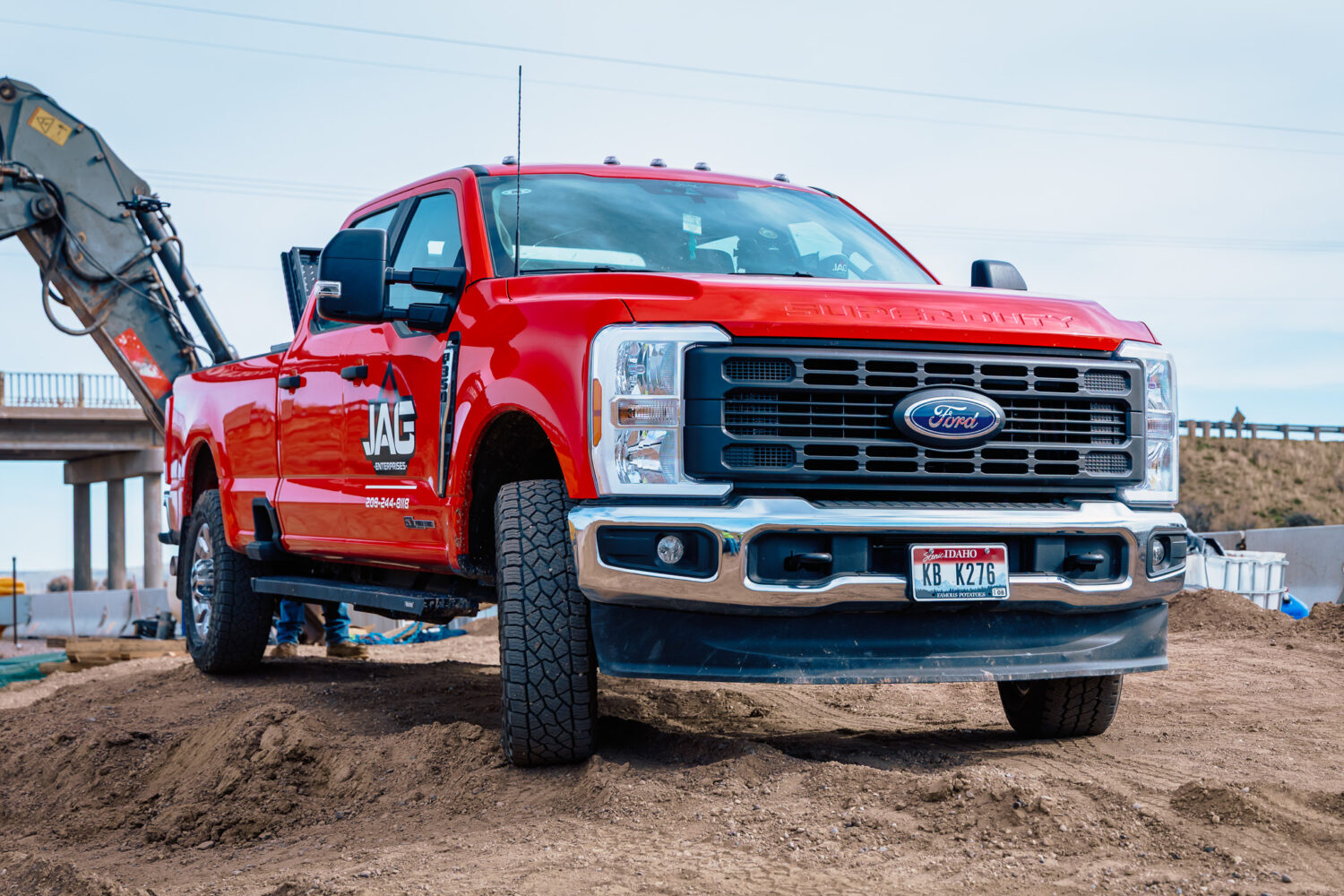
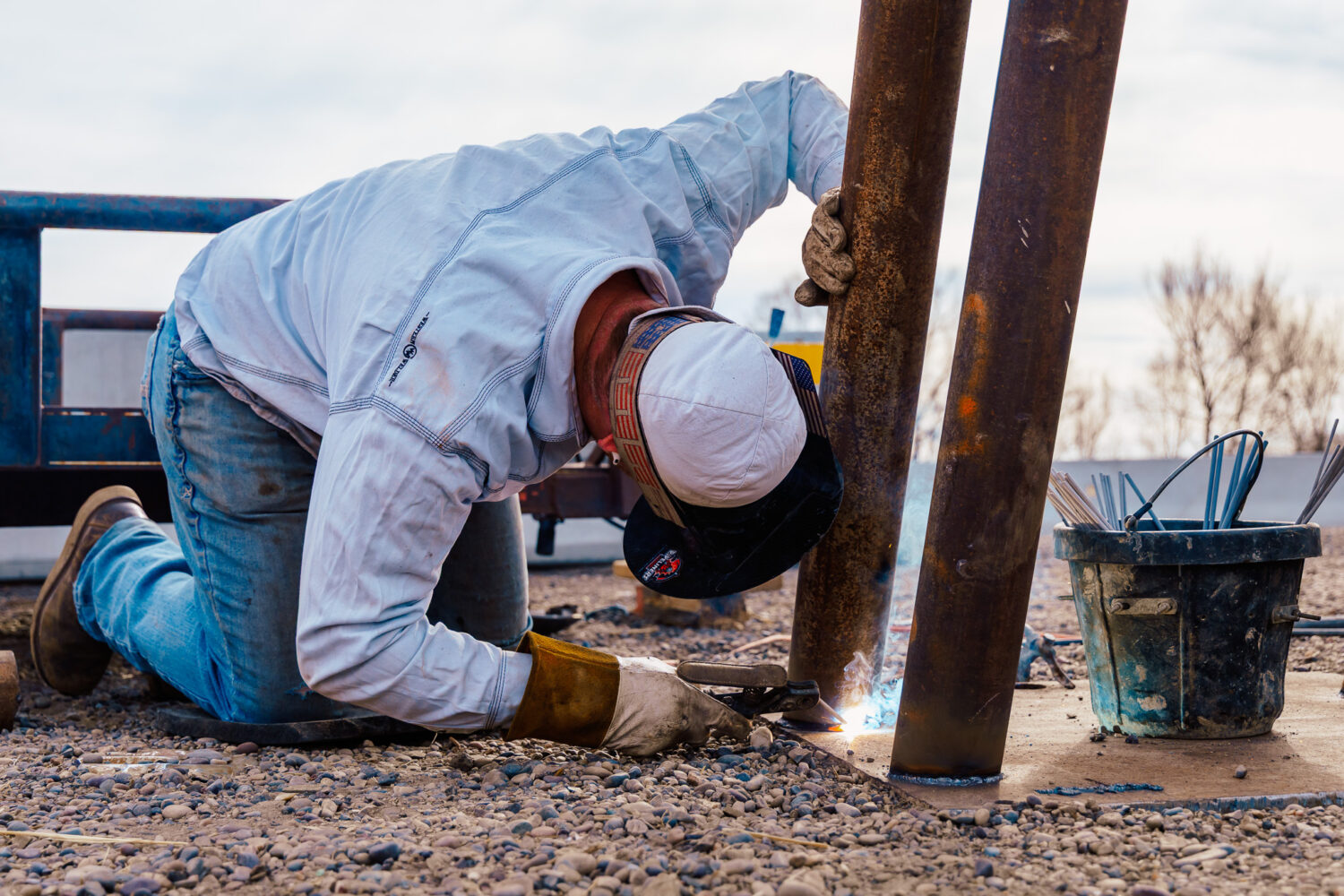
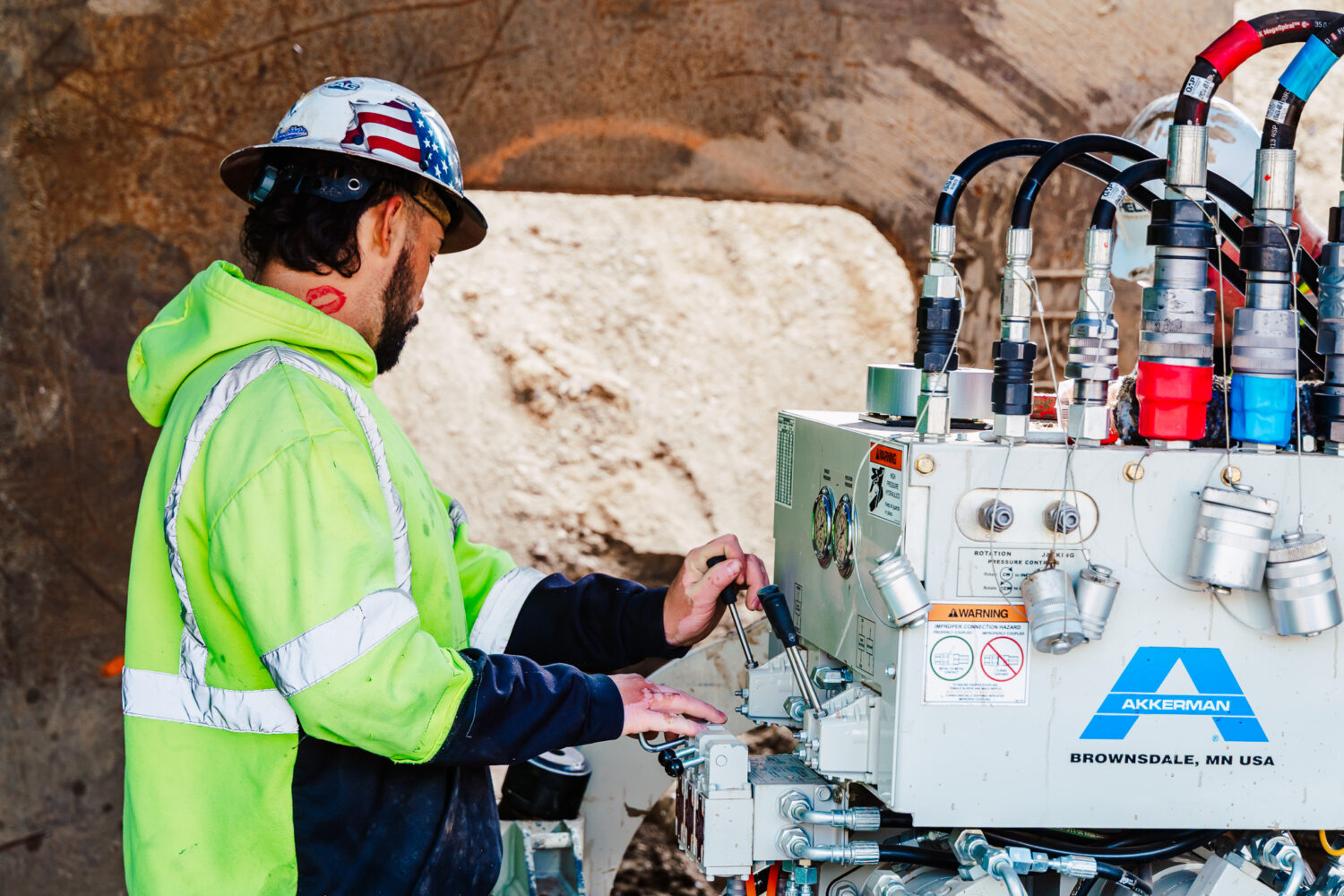
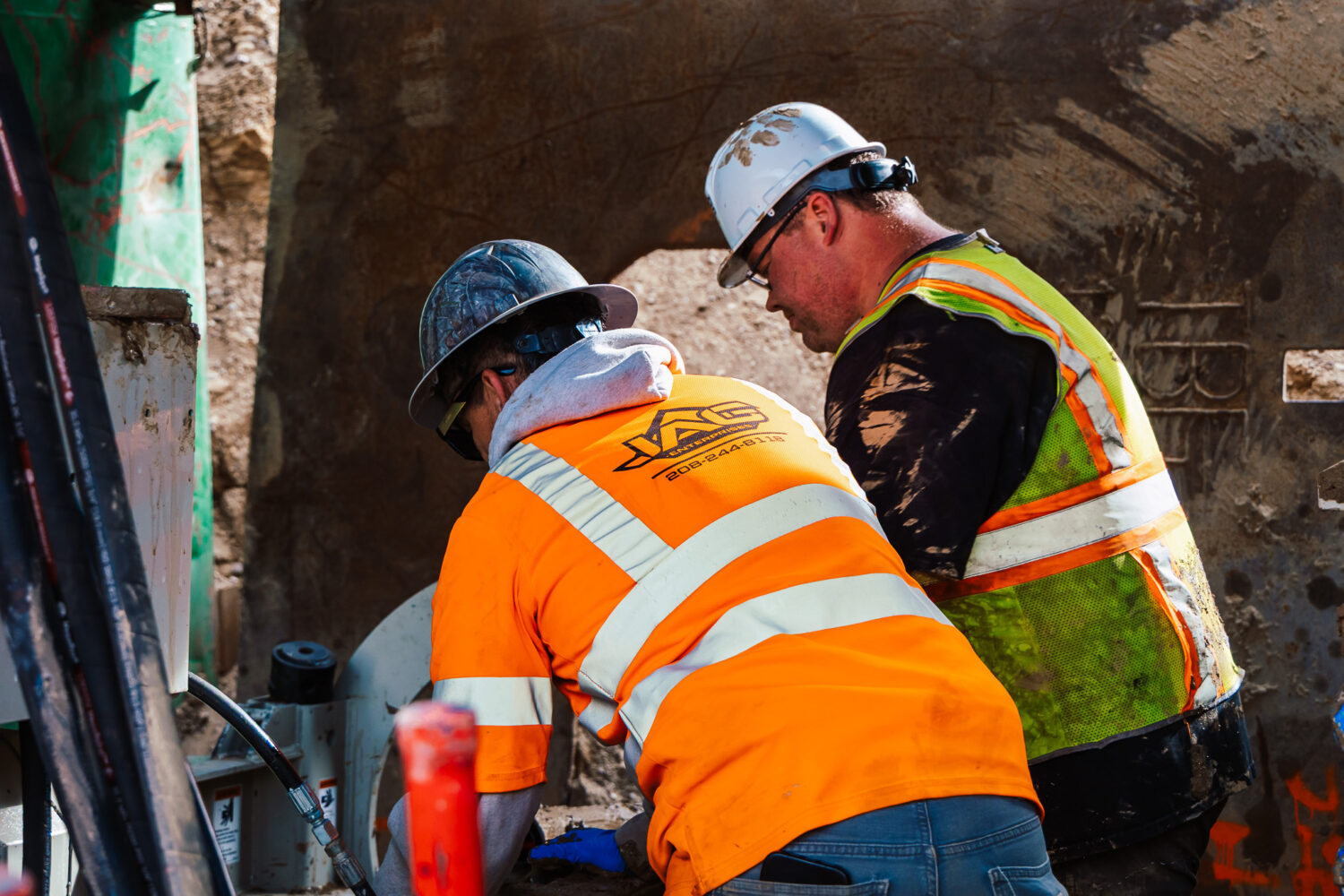
Horizontal directional drilling operation for a utility installation — southeastern Idaho
- Overview

What Is Directional Drilling?

Horizontal Directional Drilling — commonly called HDD — is a steerable trenchless method for installing underground utilities along a prescribed bore path. A surface-launched drill head is guided underground using a locating system, following a precise curved or straight path to emerge at a predetermined exit point. The utility pipe, conduit, or casing is then pulled back through the drilled path in a single operation.

HDD is one of the most versatile trenchless methods available — it can navigate around existing utilities, follow curved paths, cross under rivers and waterways, and install multiple utilities in a single bore. It works in a wide range of soil conditions and can handle pipe diameters from small conduit up to large diameter water and sewer mains.

JAG Enterprises performs directional drilling throughout Idaho, Montana, Nevada, Utah, and Wyoming for municipalities, utilities, general contractors, engineers, and private property owners. Our crews are experienced with the full range of HDD applications — from small residential service line installations to large infrastructure crossings.

Method
Horizontal Directional Drilling (HDD)
Steering
Real-time locating system
Utility Types
Water, sewer, gas, electrical, telecom
Surface Disruption
Minimal — trenchless
- How It Works
1
Site Survey and Planning
Before drilling begins the bore path is planned and engineered. Existing utility locates are performed and the entry and exit angles, bore path depth, and drilling fluid plan are all established. Potholing with a vacuum truck may be performed to verify critical utility crossings along the bore path.
2
Entry Pit and Rig Setup
A small entry pit is excavated at the drill entry point and the HDD rig is set up and aligned on the planned entry angle. A mixing system for drilling fluid — typically a bentonite slurry — is set up to lubricate the bore and carry cuttings back to the surface.
3
Pilot Bore
A small diameter drill head is launched from the entry pit and steered underground along the planned bore path. An operator tracks the drill head location in real time using a locating system and makes steering corrections to keep the bore on line and grade. The pilot bore emerges at the exit point when complete.
4
Reaming
Once the pilot bore is complete the bore hole is enlarged to the required diameter using a series of progressively larger reamer passes. Drilling fluid is circulated throughout to stabilize the bore and remove cuttings.
5
Pipe Pullback
The utility pipe or conduit is attached to the reamer at the exit point and pulled back through the bore hole as the drill string is retracted. The pipe is installed in a single continuous pull — fully protected inside the drilled bore path.
6
Connections and Restoration
With the pipe in place connections are made at each end to the existing utility system. Entry and exit pits are backfilled and compacted, and the surface is restored. The result is a fully installed utility with minimal surface evidence of the work.
Why Choose Pipe Bursting

No open trench along the pipe run — lawns, driveways, and landscaping are protected

Can upsize the replacement pipe in the same operation if greater capacity is needed

Works on most existing pipe materials — no need to know exact pipe composition

Faster project completion and lower restoration costs vs traditional open cut replacement

New HDPE pipe has a 50+ year service life and is fully corrosion resistant
HDD vs Open Cut — Why Trenchless Wins
Directional Drilling
✓  No road cutting or repaving
✓  No traffic disruption
✓  No landscape restoration
✓  Lower total project cost
✓  Faster completion

Open Cut Excavation
✗  Full trench along pipe run
✗  Road closure or lane restrictions
✗  Extensive surface restoration
✗  Higher restoration costs
✗  Longer project timeline

- Project Photos
Start Your Project

Ready to get started? Our crews can mobilize within a week.

(208) 244-8118
Get a Consultation →

Service Details
Method
Horizontal Directional Drill
Steering
Real-time locating system
Utility Types
Water, sewer, gas, electrical, telecom
Bore Path
Straight or curved
Fluid System
Bentonite slurry
Trenchless
Yes
Mobilization
Within 1 week
Why Choose Directional Drilling

No open trench along the bore path — roads, landscaping, driveways, and structures stay intact

Steerable bore path navigates around existing utilities, structures, and obstacles underground

Crosses under rivers, waterways, roads, railroads, and environmentally sensitive areas

Installs multiple utilities in a single bore — reducing cost and surface disruption on complex projects

Works in a wide range of soil conditions — sand, clay, mixed soils, and soft rock formations

Faster installation and lower overall project cost compared to open cut excavation and restoration

Common Applications
Road & Highway Crossings
Install utilities under roads and highways without cutting pavement or disrupting traffic

River & Waterway Crossings
Cross under rivers, canals, and irrigation channels with no in-water disturbance

Railroad Crossings
Utility installations under active rail lines with no track disruption or outage required

Residential Service Lines
Water and gas service line installation without disturbing lawns, driveways, or landscaping

Telecommunications & Electrical
Conduit installation for fiber, electrical, and telecommunications infrastructure

Environmentally Sensitive Areas
Install utilities through wetlands, protected habitats, and sensitive areas with minimal surface impact

Service Area

Idaho
Montana
Nevada
Utah
Wyoming